Wholesale Children's Clothing Buying Guide: Sizes, Fabrics, MOQ, and Seasonal Planning
Learn how to buy wholesale children's clothing with confidence. Compare sizes, fabrics, MOQ, quality checks, and seasonal planning for boys and girls
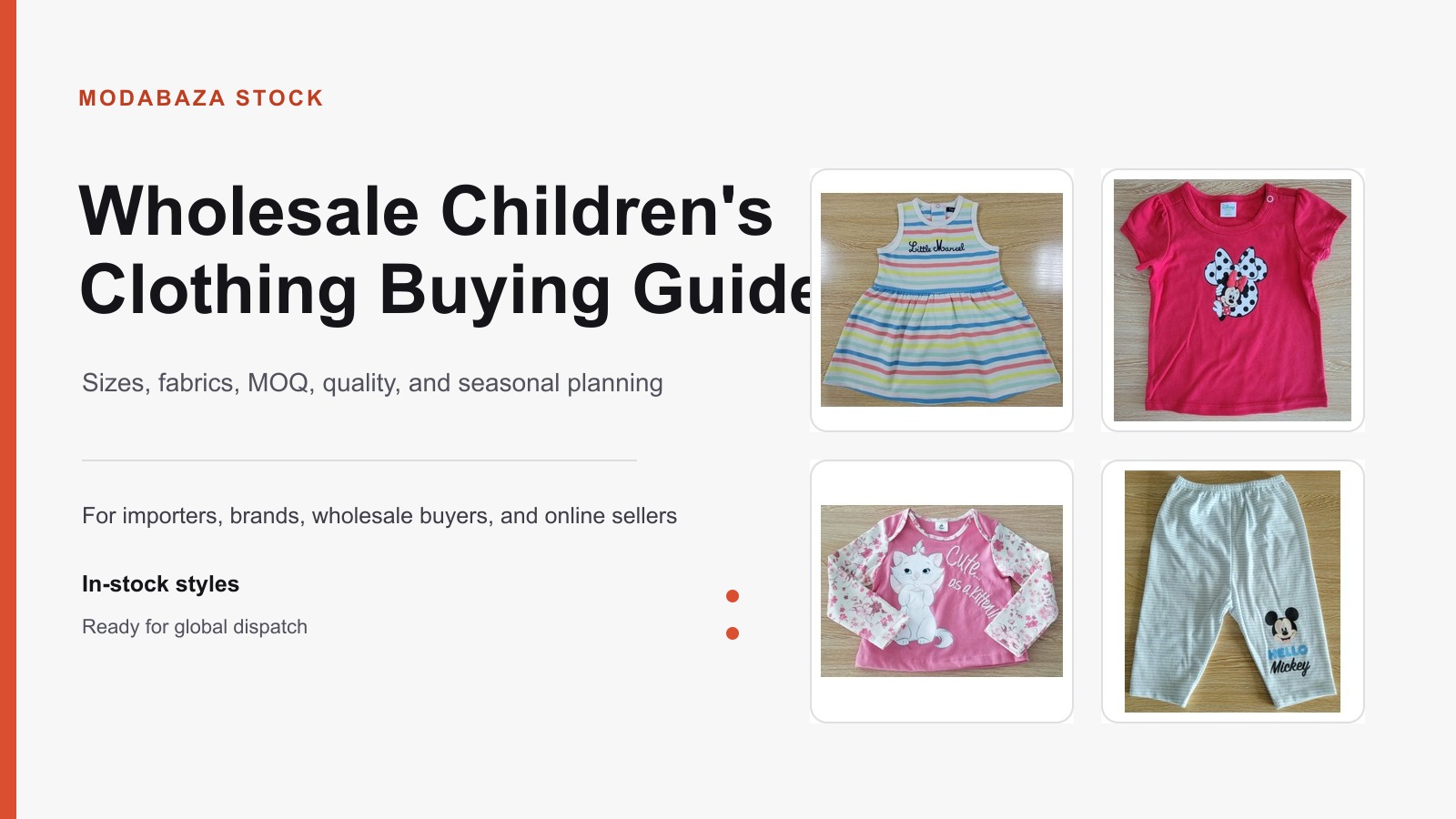
Wholesale children's clothing can be a strong product category for importers, apparel brands, online sellers, and retail shops. Demand is steady, styles change frequently, and buyers often need a reliable mix of everyday basics and seasonal fashion. However, children's clothing also requires careful attention to sizing, fabric safety, order quantity, and inventory timing.
Whether you are looking for boys' wholesale clothing or girls' wholesale clothing, a clear buying process helps you avoid dead stock, quality complaints, and delayed deliveries. This guide explains the key factors to review before placing an order.
Start with the right product categories
Children's clothing buyers usually need more than one product type. A balanced purchasing plan can include:
- Underwear and basics for year-round demand
- Pajamas and comfortable homewear
- Swimwear for spring and summer programs
- Sportswear for active and school-age children
- Outerwear for autumn and winter collections
- School uniforms for back-to-school seasons
- Accessories that increase average order value
When sourcing for a particular market, divide the assortment into boys and girls collections and then organize it by season, age group, and price level. This makes it easier to compare suppliers and identify gaps in your product range. You can review the full collection at all in-stock children's clothing.
Understand children's clothing sizes before ordering
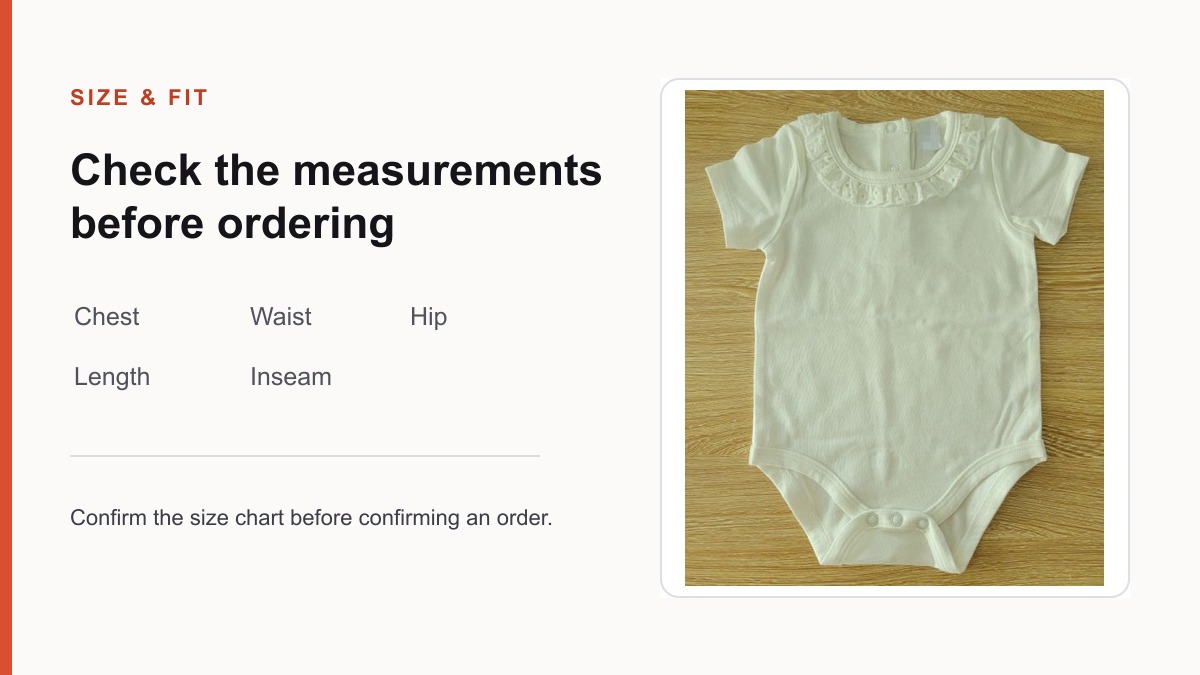
Size labels are not universal. A size 5-6 in one market may be different from a size 5-6 in another. Before confirming a wholesale order, ask for a detailed size chart and check the following measurements:
- Chest or bust width
- Waist circumference
- Hip measurement
- Shoulder width
- Sleeve length
- Total garment length
- Inseam for trousers and leggings
If you sell online, include the supplier's measurements in your product listings and explain how customers should measure themselves. Accurate size information can reduce returns and improve customer reviews.
For children's clothing, growth allowance also matters. Clothing that fits too tightly may be uncomfortable, while garments that are too large may look untidy. Review the intended age range and compare it with your local customers' expectations.
Choose fabrics for comfort and repeat orders
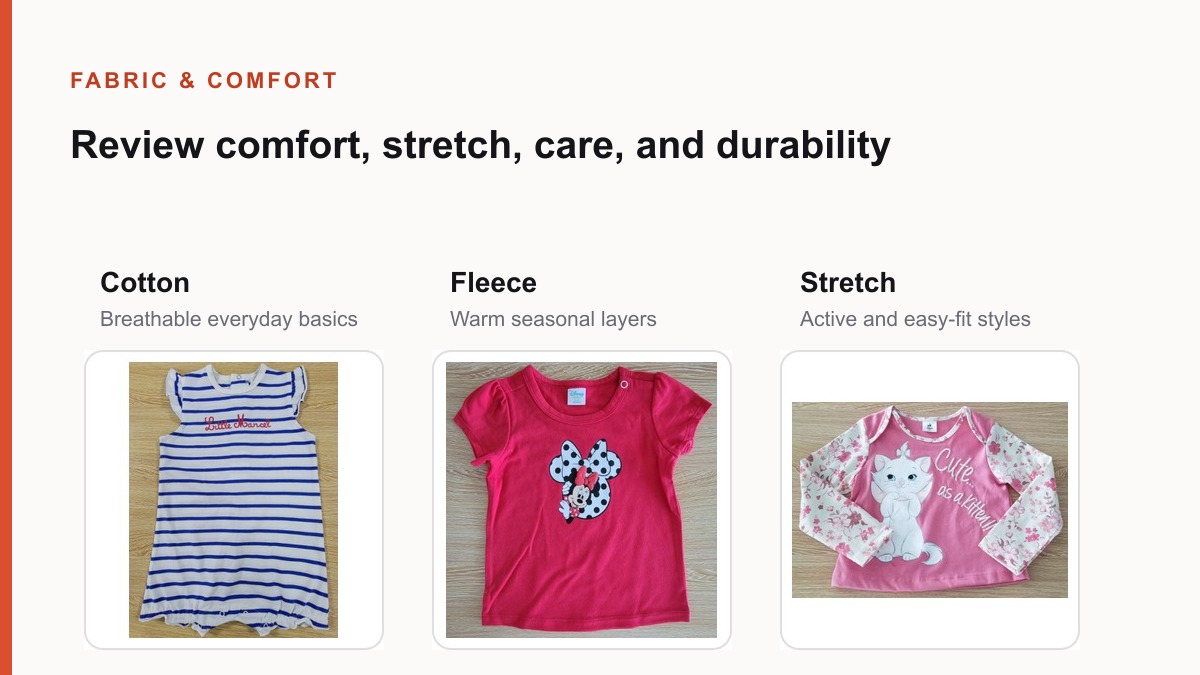
Children wear clothing frequently, so comfort, durability, and easy care are important. Common materials include:
- Cotton: Breathable and comfortable for T-shirts, dresses, underwear, and pajamas.
- Cotton blends: Often improve shape retention and reduce wrinkling.
- Polyester: Useful for sportswear, outerwear, and quick-drying garments.
- Fleece: Suitable for warm hoodies, jackets, and cold-weather sets.
- Nylon and spandex blends: Common in swimwear, leggings, and activewear.
Check fabric weight, stretch, colorfastness, and shrinkage before committing to a large order. A sample or small trial order can reveal problems that are not visible in photos, such as rough stitching, thin fabric, or inconsistent sizing.
Review quality control in detail
Price is important, but quality problems can quickly reduce profit. Inspect samples and production orders for:
- Loose threads and unfinished seams
- Broken or difficult zippers
- Buttons and snaps that are not securely attached
- Uneven hems, prints, or embroidery
- Strong chemical odors
- Color differences between units
- Incorrect labels, packaging, or size ratios
Ask whether the supplier has a quality-control process and whether defects can be replaced. If you are buying stock for immediate dispatch, confirm that the items are actually available and not only listed as a future production option.
Compare MOQ with your real sales plan
Minimum order quantity, or MOQ, affects cash flow, storage space, and risk. A low MOQ can be useful when testing new designs, while a higher MOQ may improve the unit price.
Before accepting an MOQ, calculate:
- Expected monthly sales
- Warehouse or storage capacity
- Total cash tied up in inventory
- Size and color ratio
- Shipping cost per unit
- Potential markdowns for slow-moving items
For new stores, it is often better to test a smaller range and reorder proven products than to buy a large assortment at once. For established sellers, a larger order can reduce unit costs if the demand forecast is reliable.
If you need flexible quantities, look for suppliers with in-stock children's clothing and clearly stated MOQ terms. This allows you to respond to customer demand without waiting for a long production cycle.
Plan for seasons and delivery time
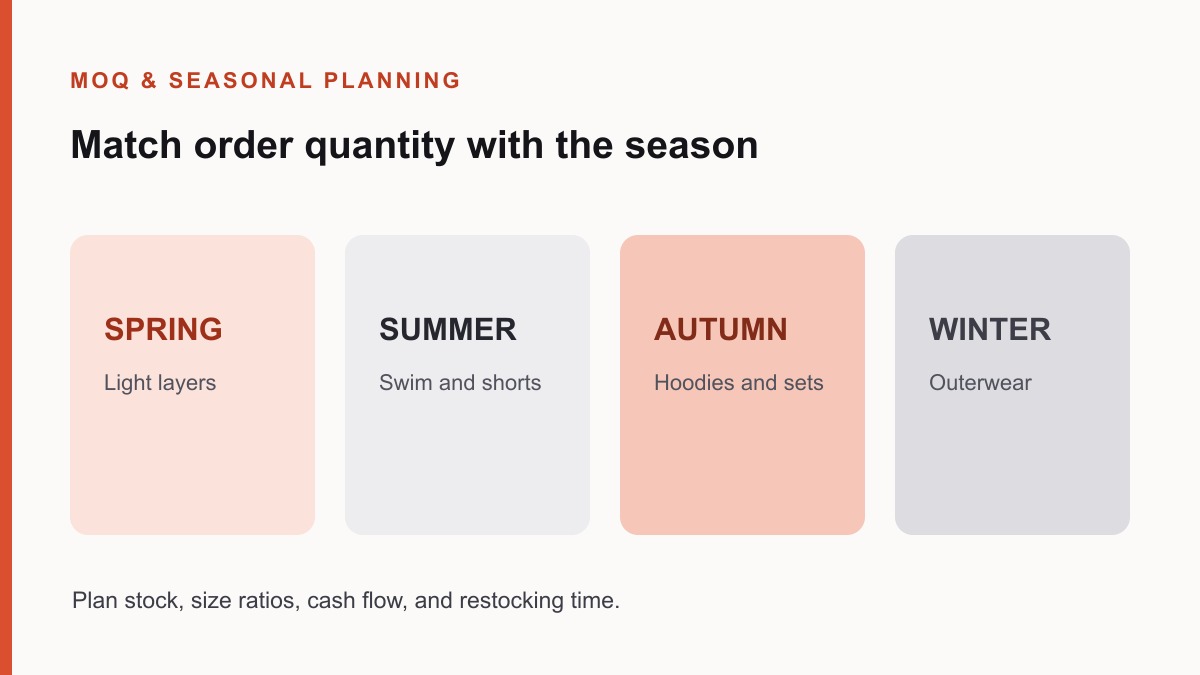
Children's clothing is highly seasonal. Spring and summer collections may include T-shirts, dresses, shorts, swimwear, and lightweight sets. Autumn and winter collections often focus on hoodies, jackets, fleece sets, long pants, and school layers.
Place orders early enough to cover:
- Production or picking time
- Quality inspection
- International shipping
- Customs clearance
- Warehouse processing
- Listing photography and content preparation
If you sell in multiple countries, remember that seasons and school calendars can differ. A supplier with ready stock can help you fill urgent orders, restock best sellers, or test a new market without committing to a full production run.
Build a product mix that sells
A profitable children's clothing collection is not only a group of low-priced items. It should include a mix of:
- Entry-level products that attract new customers
- Core basics that sell throughout the year
- Seasonal fashion pieces with higher margins
- Coordinated sets that are easy to photograph and market
- Accessories that increase the average order value
For boys, practical sets, hoodies, sportswear, underwear, and school clothing can create repeat purchases. For girls, dresses, leggings, pajamas, swimwear, and matching outfits can support both everyday and seasonal promotions.
Use customer questions and sales data to decide which categories to expand. If one style performs well, try adding related colors or sizes before testing a completely different product type.
Prepare product content for online sales
Strong product content helps both customers and search engines understand your catalog. For each product, include:
- A clear product title with the main product type
- Age range and available sizes
- Material and care instructions
- Measurements and fit notes
- Color and style variations
- MOQ and pack information
- Shipping or dispatch details
Use natural language rather than repeating the same keyword in every sentence. For example, "wholesale girls' cotton pajama set" is more useful than a long list of disconnected keywords.
Product photos should show the full garment, fabric details, labels, and available colors. Consistent photography makes it easier for buyers to compare products and helps your store look professional.
Work with a supplier who supports repeat orders
The best wholesale relationship is not only about the lowest first price. Reliable communication, consistent quality, and the ability to reorder successful products are equally important. Ask suppliers about:
- Current stock availability
- Restocking time for best sellers
- Size and color options
- Sample availability
- Packing and labeling support
- Replacement policy for defective goods
- Shipping methods and tracking
A supplier that provides clear product data and fast answers can reduce the time between product research and a live listing.
Final checklist before you place an order
Before confirming a wholesale children's clothing order, review this checklist:
- Confirm the target age range and size chart.
- Check fabric, comfort, and care requirements.
- Review samples or previous customer feedback.
- Compare MOQ with your expected demand.
- Calculate landed cost, not only unit price.
- Confirm stock availability and dispatch time.
- Plan size and color ratios carefully.
- Prepare accurate product titles, descriptions, and photos.
- Keep room in your budget for restocking best sellers.
With a focused assortment and a reliable supplier, wholesale children's clothing can become a repeatable part of your business. Browse in-stock boys' and girls' clothing to compare current styles, MOQ options, and ready-to-dispatch products.